

Some scrub colors come and go, but hospital green scrubs have been part of healthcare for generations. Once closely associated with operating rooms and surgical teams, this familiar shade has become one of the most recognizable colors in medicine.
But hospital green doesn’t have to feel old-school. With modern fits, stretch fabrics, jogger silhouettes, and more thoughtful details, the classic medical green has taken on a fresh look. It’s understated without being boring, professional without defaulting to navy or black, and distinctive without feeling too bold.
So, why did hospitals start using green in the first place, and why does the color still work so well today? Let’s look at the story behind hospital green scrubs—and how a healthcare classic fits into the modern scrub wardrobe.
What Exactly Is Hospital Green?
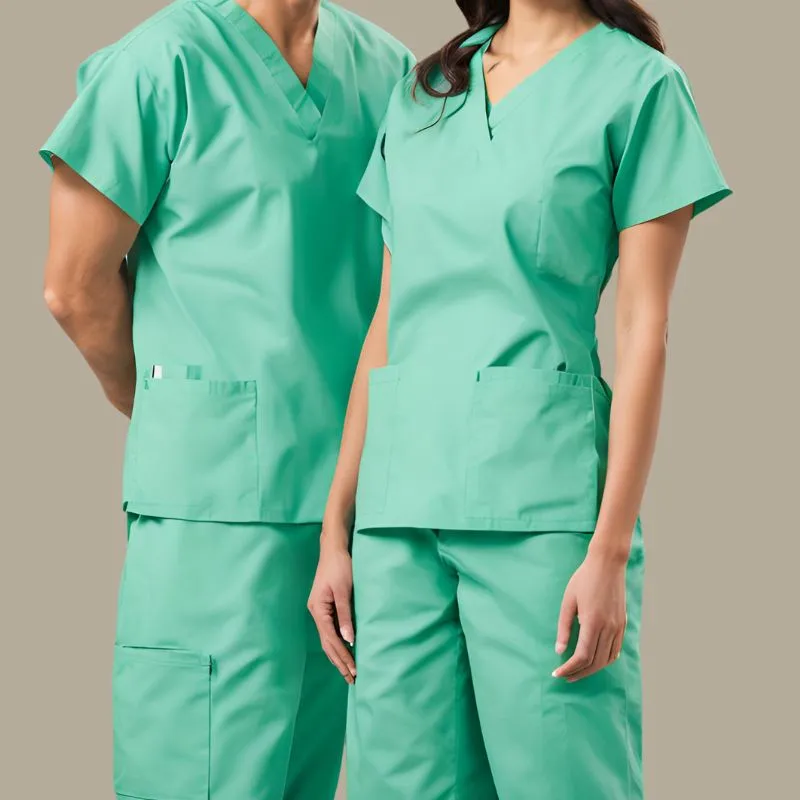
When you hear “hospital green”, you probably picture the familiar green worn by doctors, nurses, and surgical teams. But hospital green isn't actually one standardized color. The name is commonly used for the muted, medium green shades traditionally associated with medical uniforms and operating rooms.
Compared with brighter greens, hospital green tends to feel more subdued and professional. It isn't as dark and rich as hunter green, as earthy as olive, or as blue-toned as teal. Instead, it sits somewhere in the middle—a balanced green that has become instantly recognizable in healthcare settings.
You'll also hear terms like surgical green, medical green, and scrub green used for similar shades. While these names sometimes overlap, there can be noticeable differences:
- Hospital green: A balanced, muted green with a classic medical look.
- Surgical green: Often slightly cooler or more blue-green, reflecting traditional operating-room colors.
- Hunter green: A much deeper, darker green with a polished appearance.
- Olive green: Warmer and earthier, with noticeable yellow or brown undertones.
- Teal: Contains considerably more blue for a brighter, cooler appearance.
- Sage green: Softer, lighter, and more muted than traditional hospital green.
The exact shade may vary from one scrub brand or healthcare facility to another. What makes hospital green recognizable isn't a precise color code, but its unmistakable connection to healthcare.
And that connection didn't happen by accident. There's a practical reason green became such a familiar sight in hospitals—particularly in the operating room.
Why Did Hospitals Start Using Green Scrubs?
Before green became a familiar sight in operating rooms, white dominated medical clothing. White coats, uniforms, linens, and walls were closely associated with cleanliness and hygiene, making the color a natural choice for hospitals.
But in the operating room, all that white wasn't necessarily ideal.
From White to Green
Under bright surgical lighting, white clothing and surrounding surfaces could create significant glare. At the same time, surgeons needed to spend long periods concentrating on blood and tissue in shades of red and pink.
In the early 20th century, medical professionals began experimenting with green in surgical environments. One notable example came in 1914, when American surgeon Harry Sherman described using a spinach-leaf green in the operating room because it provided a more comfortable visual environment and contrasted with the reds encountered during surgery.
Over the following decades, green—and eventually blue-green shades—became increasingly common in operating rooms. By the mid-20th century, green surgical clothing was so familiar that scrubs were often simply referred to as “surgical greens”.
Why Green?
The choice wasn't simply about giving hospitals a new look. Green offered practical advantages in an environment dominated by bright lighting and red visual tones.
Red and green provide strong visual contrast. After concentrating on reddish tissue for extended periods, having green clothing and surroundings in the field of view could provide a useful visual counterbalance. Green was also less reflective and visually harsh than brilliant white under powerful operating-room lights.
Over time, what started as a practical choice became part of healthcare culture. Green was no longer simply another uniform color—it became closely tied to surgery, operating rooms, and the image of medical professionals at work.
And the relationship between green and the operating room becomes even more interesting when we look at how our eyes respond to color.

How Hospital Green Became a Healthcare Icon
Hospital green didn't become iconic because someone decided it was the official color of medicine. Its reputation developed gradually, through decades of everyday use in operating rooms and other clinical settings.
As green surgical clothing became more common throughout the 20th century, generations of patients began seeing surgeons, nurses, and operating-room staff dressed in the color. Eventually, the connection became almost automatic: see green scrubs, think healthcare.
From Practical Uniform to Medical Symbol
What began as a practical choice for surgical environments soon became part of the visual identity of medicine. Green scrubs appeared throughout hospitals, while television shows, movies, medical photographs, and other media further reinforced the image of surgical teams dressed in green.
Even today, the association remains surprisingly strong. Research published in JAMA Surgery examining how people perceive different scrub colors found that participants were most likely to identify clinicians wearing green scrubs as surgeons. This suggests that scrub color can influence how patients recognize different healthcare roles.
Of course, wearing green doesn't automatically mean someone is a surgeon. Hospitals often use their own color-coding systems, and green may represent nurses, surgical staff, technicians, or another department depending on the facility.
Still, hospital green carries something many newer scrub colors don't: history.
Navy may feel polished, black may look sleek, and brighter colors can add personality, but hospital green has decades of medical heritage behind it. It's a color that looks at home in a healthcare environment because that's exactly where its identity was built.
And perhaps that's part of why hospital green feels interesting again today. Instead of looking outdated, its unmistakable medical roots can make it feel classic—and when paired with modern scrub designs, surprisingly contemporary.
Why Does Hospital Green Feel Modern Again?
Hospital green has been around for generations, so calling it “modern” might sound contradictory. But the color itself isn't what changed. The scrubs did.
Traditional hospital scrubs were designed primarily for function. They were often loose, boxy, and made in simple unisex silhouettes. Today's scrubs look very different. Better tailoring, stretch fabrics, jogger pants, shaped tops, comfortable waistbands, and more thoughtful pocket designs have completely changed how classic scrub colors can look.
The Color Stayed Classic—The Fit Changed
Put hospital green on an oversized, straight-cut uniform and it can immediately feel traditional. Put that same shade on a streamlined V-neck top with fitted joggers, and the impression changes.
Modern scrub designs can include:
- Shaped and tailored tops
- Tapered or jogger-style pants
- Stretch fabrics that move with the body
- Comfortable elastic or yoga-style waistbands
- Cleaner, more structured silhouettes
- Functional pockets incorporated into the design
These details give hospital green a more contemporary appearance without taking away the professional character that made it popular in healthcare in the first place.
It Fits Naturally Into Today's Muted Scrub Palette
Modern scrub wardrobes aren't limited to basic navy, black, or royal blue anymore. Healthcare professionals can now choose from burgundy, brown, sage, lavender, dusty pink, olive, and many other understated shades.
Hospital green fits naturally into this more muted palette.
It's colorful without being particularly bright and distinctive without demanding too much attention. Compared with black or navy, it brings a little more personality to a uniform while still looking unmistakably work-ready.
Something is Appealing About Its Utilitarian Look
Hospital green also has an effortless quality that works particularly well for healthcare clothing. It doesn't need to look flashy. Its history gives it an inherently practical, clinical character.
That makes the color feel purposeful rather than decorative.
And because modern scrubs combine that utilitarian character with better-fitting silhouettes and softer performance fabrics, hospital green can strike an interesting balance: traditional without looking dated, and stylish without looking out of place at work.
One Color, Plenty of Modern Styles
Hospital green isn't limited to traditional loose-fitting surgical scrubs anymore. The shade can work across everything from classic straight-leg sets to modern joggers, slim-fit uniforms, relaxed silhouettes, and coordinated layers.
For someone who wants something more distinctive than navy or black but isn't interested in a particularly bright scrub color, hospital green occupies a useful middle ground.
In other words, hospital green never really needed a makeover—the scrubs around it did.
Hospital Green vs. Today’s Popular Scrub Colors
With so many scrub colors available today, hospital green is no longer the obvious default it once was. Navy, black, burgundy, pink, and brighter blues have all become common choices. Still, hospital green occupies a space that few other colors quite match: classic enough for a clinical setting, but distinctive enough to stand apart from everyday neutrals.
Here's how it compares with some other popular scrub colors:
| Scrub Color | Overall Look | Why People Choose It |
|---|---|---|
| Hospital Green | Classic, understated, clinical | Traditional healthcare look with a distinctive color |
| Navy | Polished and versatile | Easy to wear and widely accepted in healthcare settings |
| Black | Sleek and minimal | Modern appearance and easy coordination |
| Burgundy | Rich and warm | Adds color while maintaining a professional feel |
| Pink | Soft and expressive | Brings more personality to a scrub wardrobe |
| Caribbean Blue | Fresh and energetic | A brighter option that stands out without feeling overly bold |
Hospital Green as a “Colored Neutral”
One of hospital green's strengths is how easily it fits into an everyday scrub rotation. It provides more color than black or navy but is generally more subdued than brighter blues, pinks, or purples.
That makes it useful as a kind of colored neutral.
You can wear it repeatedly without it feeling overly attention-grabbing, and it pairs easily with neutral shoes, underscrubs, jackets, and accessories. At the same time, the green is distinctive enough to keep a scrub wardrobe from feeling repetitive.
Of course, the best scrub color also depends on your workplace. Many hospitals and clinics assign specific colors to different roles or departments, so always check your facility's dress code before choosing a new shade.
If you do have flexibility, hospital green offers an appealing balance: more character than a basic neutral, without losing the professional look expected in a clinical environment.
What to Look for When Buying Hospital Green Scrubs
Finding the right hospital green scrubs is about more than choosing a shade you like. When you're wearing the same uniform through a long shift, fabric, fit, mobility, and storage can matter just as much as color.
Here are a few things worth considering before buying your next set.
1. Start With the Fabric
Scrubs need to handle plenty of movement, repeated washing, and long hours of wear. Look for fabric that feels comfortable against the skin while still being durable enough for regular use.
A little stretch can make a noticeable difference when you're bending, reaching, sitting, or moving quickly. Breathable, easy-care fabrics are also useful when your scrubs need to go from wash to wear again and again.
2. Choose a Fit You Can Actually Move In
The best-looking scrubs won't help much if they restrict your movement.
Depending on your preference, you might choose a classic relaxed fit, a more tailored silhouette, straight-leg pants, or modern joggers. Whatever the style, check that you have enough room through the shoulders, hips, and legs to move comfortably.
A good fit should feel neat without being restrictive and relaxed without being excessively baggy.
3. Pay Attention to Pocket Design
Pocket placement can make a major difference during a busy shift. Think about what you actually carry throughout the day—your phone, pens, scissors, notes, gloves, ID, or other small essentials.
Rather than simply looking for the highest possible pocket count, consider their placement, size, and accessibility. Well-positioned chest, hip, and cargo pockets can keep essentials close without making your uniform feel bulky.
4. Look at the Green in Different Lighting
Remember that “hospital green” isn't a standardized shade. One brand's hospital green may be darker, cooler, or more muted than another's.
Product photography can also look different depending on lighting and your screen. If you're trying to match an existing uniform or workplace color requirement, check the product description carefully rather than relying on the name alone.
5. Check Your Workplace Dress Code First
Finally, make sure you're actually allowed to wear hospital green.
Some healthcare facilities let employees choose their own scrub colors, while others use specific colors to identify departments or professional roles. A beautiful new green set isn't very useful if your workplace requires navy.
Once you've confirmed the dress code, focus on the combination that matters most: a shade you enjoy wearing, a fit that lets you move freely, and practical details that make your shift a little easier.

Where to Find Modern Hospital Green Scrubs
If you love the classic look of hospital green but don't want the boxy feel of traditional uniforms, today's scrubs give you plenty of more modern options.
Look for hospital green scrubs that combine the familiar medical color with details designed for today's healthcare professionals—comfortable stretch, a flattering fit, practical pockets, and enough flexibility to keep up with long, active shifts.
At Long Shift Scrubs, our Hospital Green scrubs bring that classic healthcare-inspired shade into a more contemporary silhouette. They're designed for professionals who want their workwear to feel functional and comfortable while still looking clean and put-together.
Whether you prefer a coordinated scrub set or want to add hospital green to a rotation of navy, black, burgundy, and other colors, it's an easy way to bring a little variety to your work wardrobe without going overly bright.
Most importantly, choose scrubs that work for the way you work. The right hospital green set should do more than look good—it should give you the comfort, movement, and everyday functionality you need from the beginning of your shift to the end.
Final Thoughts
Hospital green has been part of healthcare for more than a century, but that doesn't mean it belongs in the past. What began as a practical choice for surgical environments gradually became one of the most recognizable colors in medicine.
Today, hospital green scrubs offer an interesting mix of old and new. The color carries the familiar, professional character of traditional healthcare uniforms, while modern fabrics, better fits, jogger silhouettes, and functional details give it a completely different feel.
For healthcare professionals who want something more distinctive than navy or black without moving into a particularly bright color, hospital green can be an easy middle ground. It's understated, versatile, and unmistakably connected to healthcare.
In the end, hospital green didn't really need reinventing. The scrubs around it did.
FAQs about Hopital Green Scrubs
Are hospital green and surgical green the same?
The terms are sometimes used interchangeably, but there isn't one standardized color for either. Surgical green may lean slightly cooler or more blue-green, while “hospital green” is often used more broadly for the classic muted green associated with medical uniforms.
What do green scrubs mean in a hospital?
Green scrubs are traditionally associated with surgeons and operating-room staff. However, there is no universal scrub color code. One hospital might assign green to surgical staff, while another may use it for nurses, technicians, or a completely different department.
What shoes should I wear with hospital green scrubs?
White, black, gray, and neutral sneakers are some of the easiest options. The best choice, however, should prioritize comfort, support, workplace requirements, and slip resistance where appropriate—especially if you spend most of your shift on your feet.
Are green scrubs only for surgeons?
No. Although green has a particularly strong historical association with surgery, it isn't exclusive to surgeons. If your workplace allows employees to choose their own scrub colors, hospital green can be worn across many healthcare roles.
