

When you're on your feet for an 8-, 10-, or 12-hour nursing shift, the right shoes can make a noticeable difference. Between standing at the bedside, walking from room to room, and moving quickly when things get busy, nurses need footwear that can keep up.
Clogs and sneakers are two of the most popular options, but each has its strengths. Clogs are known for their supportive feel and easy-to-clean design, while sneakers typically offer more cushioning, flexibility, and a secure fit for walking.
So, are clogs or sneakers better for nurses? In this guide, we'll compare comfort, support, slip resistance, cleaning, breathability, and long-shift performance to help you decide which makes more sense for the way you work.
Why Footwear Matters So Much for Nurses
Nursing is tough on your feet. A long-hour shift can mean long periods of standing at the bedside or medication station, mixed with constant trips between patient rooms, nursing stations, and different departments. Unlike a typical desk job, there may be very few opportunities to give your feet a real break.
Long Hours on Your Feet
Hard hospital floors can make those hours feel even longer. Nurses may alternate between standing relatively still during procedures and quickly walking across a unit, sometimes while pushing equipment or assisting patients. This combination of prolonged standing and repeated movement puts different demands on the feet throughout a single shift.
Common Challenges During a Shift
Foot fatigue is an obvious concern, but it isn't the only one. Nurses may experience discomfort around the heels, arches, ankles, or lower legs after spending hours on their feet. Research involving nurses has also found an association between lower perceived shoe comfort and work-related foot and ankle pain.
Then there are the practical challenges of a healthcare environment. Feet can become hot and sweaty inside shoes worn all day, while smooth floors may become slippery after spills or cleaning. Bodily fluids and other contaminants also make cleanability an important consideration.
What Should a Good Nursing Shoe Provide?
A good nursing shoe should balance proper fit, cushioning, arch support, stability, and traction rather than focusing on just one feature. It should fit securely enough for quick movement without feeling restrictive, while providing enough room for your feet to remain comfortable as the shift goes on.
Slip-resistant traction is particularly important on hospital floors, while breathable materials can help manage heat and moisture. An upper that's easy to wipe clean can also make life much easier after a messy shift.
Ultimately, the best nursing footwear isn't simply the softest shoe or the most popular style. It's a shoe that can comfortably support the way you actually move and work throughout your shift.
What Are Nursing Clogs?
When you hear "clogs," you might picture traditional wooden shoes, but modern nursing clogs are very different. Today's designs are made specifically with long hours, comfort, and demanding work environments in mind.
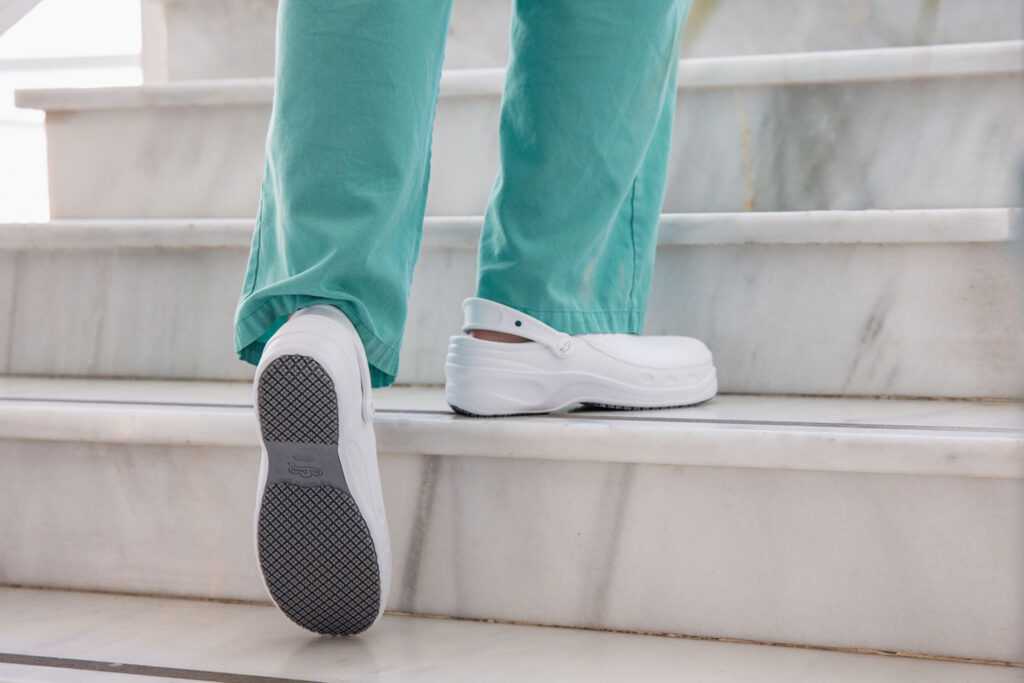
Most nursing clogs have a roomy toe box, structured sole, and easy-to-clean upper. Their slip-on construction makes them convenient to put on and take off, while closed-toe designs offer more coverage in clinical environments. Many healthcare-specific clogs also feature slip-resistant outsoles, and some include a heel strap or fully enclosed heel for a more secure fit.
There are several types of clogs nurses may come across:
- Backless clogs: Easy to slip on and off, but provide less heel security.
- Clogs with heel straps: Add extra security while keeping the convenience of a clog.
- Fully enclosed healthcare clogs: Cover the entire foot and generally provide a more secure fit.
- Foam or rubber clogs: Lightweight, water-resistant, and typically very easy to clean.
These differences are important because not every clog performs the same way. A backless foam clog, for example, can feel very different from a structured, fully enclosed healthcare clog. When comparing clogs with sneakers, it's better to consider the specific design, fit, outsole, and support rather than assuming all clogs offer the same benefits.

What Are Nursing Sneakers?
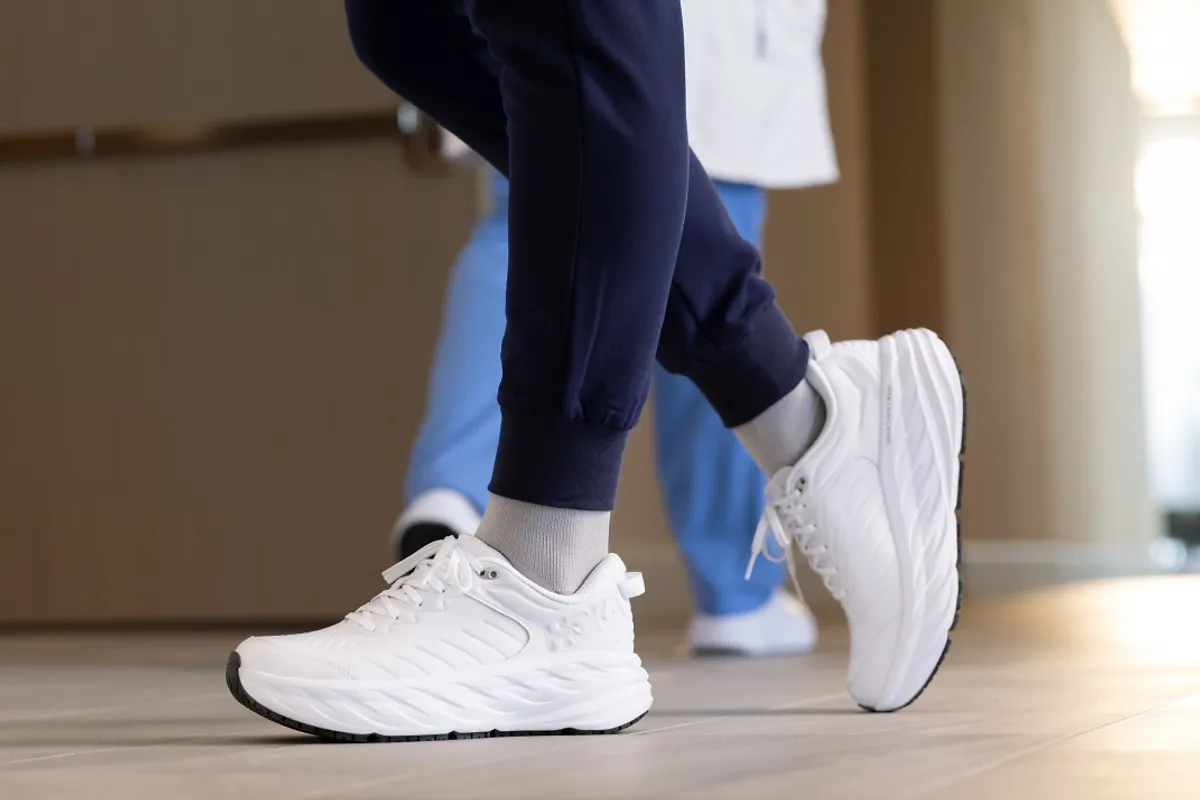
Nursing sneakers are athletic-style shoes chosen or designed to handle the long hours and frequent movement that come with healthcare work. They typically feature cushioned midsoles, flexible soles, heel support, and a secure lace-up fit, making them particularly appealing to nurses who spend much of their shift walking.
However, there's an important difference between regular athletic sneakers and shoes designed specifically for healthcare environments.
Regular Athletic Sneakers
Running and walking sneakers are often lightweight, flexible, and highly cushioned. Many also use breathable mesh uppers, which can help keep feet cooler during a long shift. The downside is that mesh can absorb liquids and may be more difficult to clean after spills.
Healthcare or Work Sneakers
Healthcare sneakers combine the familiar feel of an athletic shoe with features intended for the workplace. Depending on the design, they may include slip-resistant outsoles, smooth or fluid-resistant uppers, supportive cushioning, and easy-to-clean materials.
For nurses comparing sneakers with clogs, this distinction matters. A lightweight mesh running shoe and a slip-resistant healthcare sneaker may look similar, but they can perform very differently in a clinical environment.
Clogs vs. Sneakers for Nurses: How Do They Compare?
The biggest difference between clogs and sneakers isn't simply how they look or feel when you first put them on. What matters is how they perform during the realities of a nursing shift—hours of standing, constant walking, quick movements, slippery floors, spills, and very little time to think about your shoes.
Here's how the two compare where it matters most.
1. Which Is Better for Standing All Day?
For shifts that involve long periods of standing, clogs can be a strong choice. Their structured soles and typically roomy fit provide a stable platform underfoot, which some nurses prefer when spending extended periods at the bedside or assisting with procedures.
Sneakers approach standing comfort differently. Instead of relying on a firmer platform, many use cushioned midsoles to absorb impact and reduce the feeling of standing on hard flooring. Supportive sneakers can also provide excellent arch and heel stability.
It's worth remembering that more cushioning doesn't automatically mean more comfort. Research on occupational footwear suggests there can be a tradeoff between softness and stability. Very soft footwear may feel comfortable initially but may not provide the structure every wearer needs over many hours.
The verdict: Clogs can be particularly appealing for standing-heavy shifts, but a supportive sneaker can perform just as well. Fit, support, and personal comfort matter more than the category alone.
2. Which Is Better for Walking All Shift?
This is where sneakers tend to pull ahead.
Athletic-style shoes are designed with repeated movement in mind. They're generally lightweight and flexible, with cushioning that helps absorb repetitive impact and a secure heel and midfoot fit that keeps the shoe in place as you walk.
Clogs can still be comfortable for walking, especially modern healthcare designs, but some are heavier or more rigid. Backless styles also provide less heel containment, which may be noticeable when you're constantly moving between rooms.
For a nurse covering a large unit and accumulating thousands of steps throughout the day, those differences can become more noticeable as the hours pass.
The verdict: For walking-intensive shifts, sneakers generally have the advantage.
3. Slip Resistance: Which Is Safer?
Hospital floors can quickly become slippery due to water, cleaning products, spills, or other fluids, making traction an important consideration regardless of which shoe style you prefer.
And this is one area where the label "clog" or "sneaker" tells you very little.
A large randomized trial involving healthcare workers found significantly fewer slips among workers given highly slip-resistant footwear compared with those wearing their usual shoes. The takeaway isn't that one shoe category is safer—it's that the outsole matters.
A clog isn't automatically slip-resistant just because it's designed for healthcare, and an athletic sneaker isn't necessarily suitable for slippery hospital floors either.
When shopping, look for footwear specifically designed or tested for workplace slip resistance. Pay attention to the tread pattern and grip, and remember that worn-down outsoles can become less effective over time.
The verdict: Neither automatically wins. Choose the shoe with reliable, workplace-appropriate slip resistance.
4. Stability and Fast Movement
Nurses don't always get to move at a comfortable walking pace. You might need to respond quickly to a patient, change direction suddenly, push equipment, move a bed, climb stairs, squat, or bend—all within the same shift.
Sneakers generally have an advantage here because they secure the heel and midfoot. A well-fitting lace-up shoe moves with your foot rather than allowing your foot to move independently inside the shoe.
Clogs vary much more. A traditional backless clog provides less heel security, while a fully enclosed healthcare clog or one with a secure heel strap can offer considerably more stability.
The verdict: For nurses whose roles involve frequent or fast movement, sneakers usually offer the more secure fit.
5. Cleaning and Fluid Resistance
When it comes to easy cleaning, clogs have a clear practical advantage.
Many healthcare clogs have smooth synthetic, rubber, or coated uppers that can be wiped clean quickly. They also tend to have fewer fabric panels where liquids and dirt can soak in.
Traditional athletic sneakers can be trickier. Breathable mesh feels great during a long shift, but it can absorb liquids and isn't always easy to clean after an especially messy day.
Healthcare-specific sneakers are changing that comparison, though. Some now use smooth, water-resistant or fluid-resistant uppers while maintaining an athletic-style construction.
The verdict: Clogs generally win for easy cleaning and fluid resistance, although purpose-built healthcare sneakers can come surprisingly close.
6. Breathability and Sweaty Feet
After hours inside the same shoes, breathability starts to matter.
Sneakers usually perform better here because many feature mesh or textile uppers that allow air to circulate around the foot. Their lighter construction can also make them feel less hot during long shifts.
Closed synthetic clogs may retain more heat, although ventilated designs can improve airflow considerably.
There's a tradeoff, however. The highly breathable mesh that keeps your feet cool can also make a shoe more difficult to clean and provide less protection from spills. Smooth, fluid-resistant materials are easier to wipe down but may not breathe as well.
The verdict: Sneakers usually win for breathability, while clogs often have the advantage when easy cleaning and fluid resistance are higher priorities.
Clogs vs. Sneakers for Different Types of Nurses
Your department can be just as important as your personal footwear preference.
ER nurses often spend shifts moving quickly and changing direction frequently. A secure, lightweight, cushioned sneaker may be especially practical for this type of work.
ICU nurses may alternate between long periods at the bedside and frequent walking. Either supportive clogs or sneakers can work well depending on individual preference.
Med-Surg nurses often cover significant distances throughout a shift, making the cushioning, flexibility, and secure fit of sneakers particularly appealing.
OR nurses may spend long periods standing and may prioritize easy cleaning and fluid-resistant materials. Healthcare clogs can work particularly well here, provided they meet the facility's footwear requirements.
Clinic and office nurses may experience a more balanced mix of sitting, standing, and moderate walking, so either style can be suitable.
These aren't strict rules. Two nurses working in the same department can have completely different footwear preferences, and workplace policies should always be considered.
Which Is Better for a 12-Hour Shift?
For a 12-hour shift, the shoe that feels softest during a quick try-on isn't necessarily the shoe you'll want to be wearing at hour ten.
Long-shift footwear needs to balance cushioning, support, stability, traction, fit, breathability, and weight. Your toes should have enough room to move naturally, your heel should feel stable, and the shoe shouldn't create uncomfortable pressure points as the hours pass.
If your shift involves constant walking, a supportive sneaker will often be the more versatile option. If you spend more time standing, prefer firmer support, or need footwear that's especially easy to clean, a healthcare clog may make more sense.
Ultimately, neither clogs nor sneakers universally win the 12-hour-shift test. The better shoe is the one that matches what your feet are actually doing for those 12 hours.
When Clogs May Be the Better Choice
Clogs may be worth considering if you spend significant portions of your shift standing, prefer a firmer and more structured feel underfoot, or like having extra room around your toes.
They're also particularly practical when cleaning is a priority. If spills are common in your workplace, being able to quickly wipe down a smooth upper can be a major advantage. Nurses working in procedural environments may appreciate this combination of structure and easy maintenance.
Clogs may be the better fit if you:
- Spend long periods standing
- Prefer firm, structured support
- Like a roomy toe box
- Want shoes that are easy to wipe clean
- Regularly work around spills or fluids
- Prefer slip-on footwear
- Already know that your feet are comfortable in clogs
When Sneakers May Be the Better Choice
Sneakers tend to make the most sense when movement dominates your shift.
If you're constantly walking between rooms, covering a large unit, or frequently need to move quickly, the combination of cushioning, flexibility, low weight, and a secure heel can be difficult to beat.
They're also worth considering if your feet tend to get hot during long shifts, since breathable athletic-style uppers can provide better airflow than many closed clogs.
Sneakers may be the better fit if you:
- Walk constantly throughout your shift
- Cover a large hospital floor
- Frequently need to move quickly
- Prefer softer cushioning
- Want a secure heel and midfoot fit
- Prefer lightweight footwear
- Want greater breathability
- Already feel comfortable wearing athletic shoes for long periods

What to Look for When Buying Nursing Shoes
Whether you prefer clogs or sneakers, the label on the shoe matters less than how well it works for your feet and your shift. Before buying a new pair, focus on the features that will still matter after you've been standing and walking for hours.
1. Get the Fit Right
Start with proper sizing and enough room in the toe box. Your toes shouldn't feel squeezed together, but the shoe also shouldn't be so loose that your foot slides around as you walk. A secure heel is especially important if your job involves quick movement or frequent changes in direction.
Keep in mind that feet can feel slightly different after several hours of standing, so a shoe that already feels tight when you first try it on probably won't become more comfortable halfway through a long shift.
Fit matters throughout your entire work uniform—not just your shoes—so it's also worth making sure you're wearing the right scrub size for comfortable movement throughout your shift.
2. Look for Support, Not Just Softness
A thick, pillowy sole can feel impressive at first, but softness alone doesn't make a good nursing shoe. Look for a balance of cushioning, arch support, and stability.
The shoe should provide enough cushioning to make hard floors more comfortable without making your feet feel unstable. A stable heel or platform can also help the shoe feel more secure when standing, walking, bending, or changing direction.
3. Pay Attention to the Outsole
Slip resistance should be a priority in healthcare environments. Rather than assuming every nursing clog or athletic sneaker has enough grip, check whether the outsole is designed for workplace slip resistance.
Also look at the tread itself. A good outsole won't help forever if it's heavily worn, so regularly check your nursing shoes for smooth or damaged areas.
4. Consider Cleaning and Breathability
Think about the environment where you'll actually wear the shoes.
If spills and fluids are common, smooth, easy-to-wipe materials may be more practical than highly absorbent mesh. If heat and sweaty feet are a bigger concern, breathable construction may be worth prioritizing.
There's often a tradeoff between the two, so choose based on what you encounter most during your shifts. The same thinking applies to the rest of your workwear - scrub fabric choice can also affect breathability, comfort, and easy care throughout a long shift.
5. Don't Forget Weight and Durability
Even a supportive shoe can become tiring if it feels unnecessarily heavy after hours of walking. Look for a pair that feels substantial enough to provide stability without weighing your feet down.
Durability matters too. Nursing shoes deal with long hours, frequent movement, cleaning, and repeated exposure to hard flooring, so check the quality of the outsole, upper, stitching, and overall construction.
6. Check Your Workplace Requirements
Before falling in love with a pair, make sure you're actually allowed to wear them. Hospitals, clinics, nursing schools, and individual departments may have their own footwear policies regarding closed toes, heel coverage, slip resistance, colors, or other safety requirements.
This is particularly important with backless clogs, which may not meet the footwear requirements of every workplace.
Final Thoughts
So, which is better for nurses: clogs or sneakers? There isn't a single winner for every shift.
Sneakers tend to make more sense for walking-heavy roles, especially when you want cushioning, flexibility, breathability, and a secure fit. Clogs can be a great choice for standing-heavy shifts, particularly if you prefer structured support and want footwear that's quick and easy to clean.
More importantly, don't choose based on the shoe category alone. A well-designed, slip-resistant clog may be far better for work than an ordinary sneaker, while a supportive healthcare sneaker may outperform a poorly fitting clog. Fit, traction, support, comfort, and your workplace requirements should always come first.
Think about what your feet actually do during your shift. The best nursing shoe is ultimately the one that keeps you comfortable and confident from clock-in to clock-out.
Frequently Asked Questions
Are clogs or sneakers better for nurses?
Both can be good options. Sneakers generally have an advantage for nurses who walk frequently or move quickly, while clogs can be particularly practical for long periods of standing and environments where easy cleaning is important. Your individual comfort and workplace requirements should guide your decision.
Are clogs comfortable for 12-hour nursing shifts?
They can be. Supportive healthcare clogs with a comfortable footbed, roomy toe box, and stable sole may work well for long shifts, especially for nurses who spend significant time standing. However, comfort varies by foot shape and clog design.
Why do so many nurses wear clogs?
Clogs are popular in healthcare because many designs are supportive, roomy, easy to slip on, and simple to wipe clean. Healthcare-specific clogs may also offer fluid-resistant materials and slip-resistant outsoles, making them practical for clinical environments.
Are sneakers good for nursing?
Yes. Supportive sneakers can be particularly useful for nurses who spend much of their shift walking. Their cushioning, flexibility, lightweight construction, and secure fit can make them comfortable for movement-heavy roles. For clinical use, look for appropriate traction and easy-to-clean materials as well.
